The importance of transitions
- Lizette Bautista
- Jan 14
- 3 min read

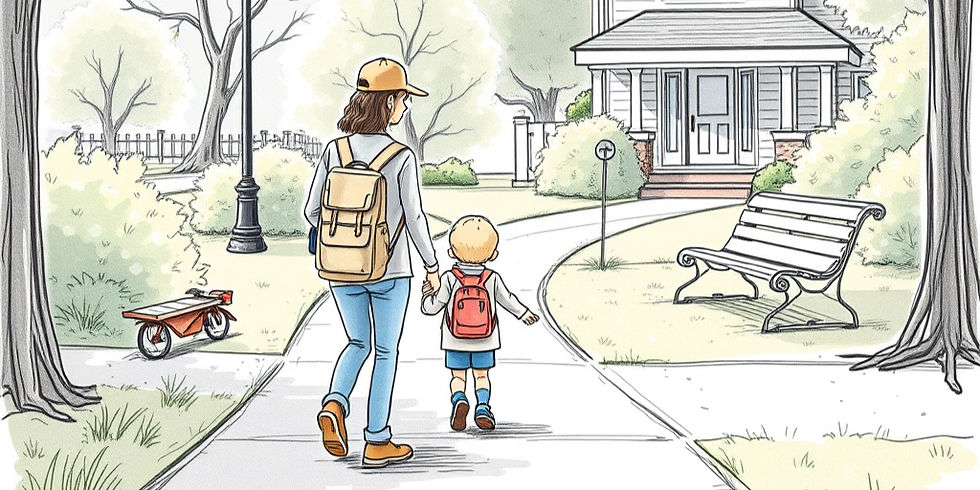
How often does it happen that you get caught up in an activity you enjoy and have a difficult time walking away from it? Or being in a fun space with your friends and not wanting to leave, but you know that you have other things to do. You see, for young children, it can be very overwhelming and complicated to step away or stop an activity and move on to another with no previous explanation, causing outbursts, what can seem like tantrums, or “bad behavior,” when in reality it can be a misunderstood expression of emotions from the child.
Imagine you are having the time of your life, playing with your friends, and then all of a sudden your parent picks you up with no explanation and puts you in the car in a rush. You would probably feel confused, puzzled, frustrated, and even upset—you were having fun. What can be more important than that? This can lead to a stressful transition full of screaming and crying. Children don’t have the capacity to self-regulate unless they are given tools to set themselves up for success.
How many times do we find ourselves rushing through life? As adults, we have the knowledge and capacity to move from one thing to another, and even then we have to mentally prepare ourselves. So why are you expecting a child who is just learning about their emotions to be able to make an instant switch and move from a fun time at the park—learning while playing—to running errands with a grown-up (boring).
So how do you get ahead of this or solve it? You create transitions.
Every day, it begins with an eye-level conversation with the child, explaining how the day will go and creating expectations for the day. (Children don’t develop a logical mind until they are 8 years old.) It’s hard for children to remember this daily, which is why it’s important that you, as their parent or educator, remind them. Once you’ve established this, the next steps can be incorporated.
Use songs. Music can be a great tool for transitions—when it’s time to put toys away and move over to the table to eat, to get ready for the day, or when it’s time for a bath.
Start with a 10-minute warning, then 5, then 2, letting the child know that the time to move to the next activity is coming up. You can even use an alarm so they have a visual understanding.
Use bubbles, place dots, use chalk, or create some other form of having the child follow a path toward the next activity.
Once you have established a transition, it is very important that you reestablish the plan and expectations for the next activities. Sharing one or two of the next activities will be enough—you don’t want to overwhelm the child.
Now it’s time to put all of this into action! If you feel like one thing doesn’t work, try another—it’s not one size fits all. What works for one child might not work for another. Don’t budge; hold up your boundaries and be patient with your child and yourself. You will find the best way to go throughout your day. You also have to remember that children experience different reactions based on sleep, hunger, and environment.
I invite you to read my co-regulation post, which will give you better support for implementing transitions into your life.

Comments